





A parasol consists of many different individual parts that together ensure its functionality and stability. Below you will find an overview of the structure and the most important components of a parasol.
The basic structure
- In principle, the structure of a parasol can be roughly divided into the following sections:
- 1. Canopy
- 2. Parasol crown
- 3. Opening mechanism
- 4. Parasol pole
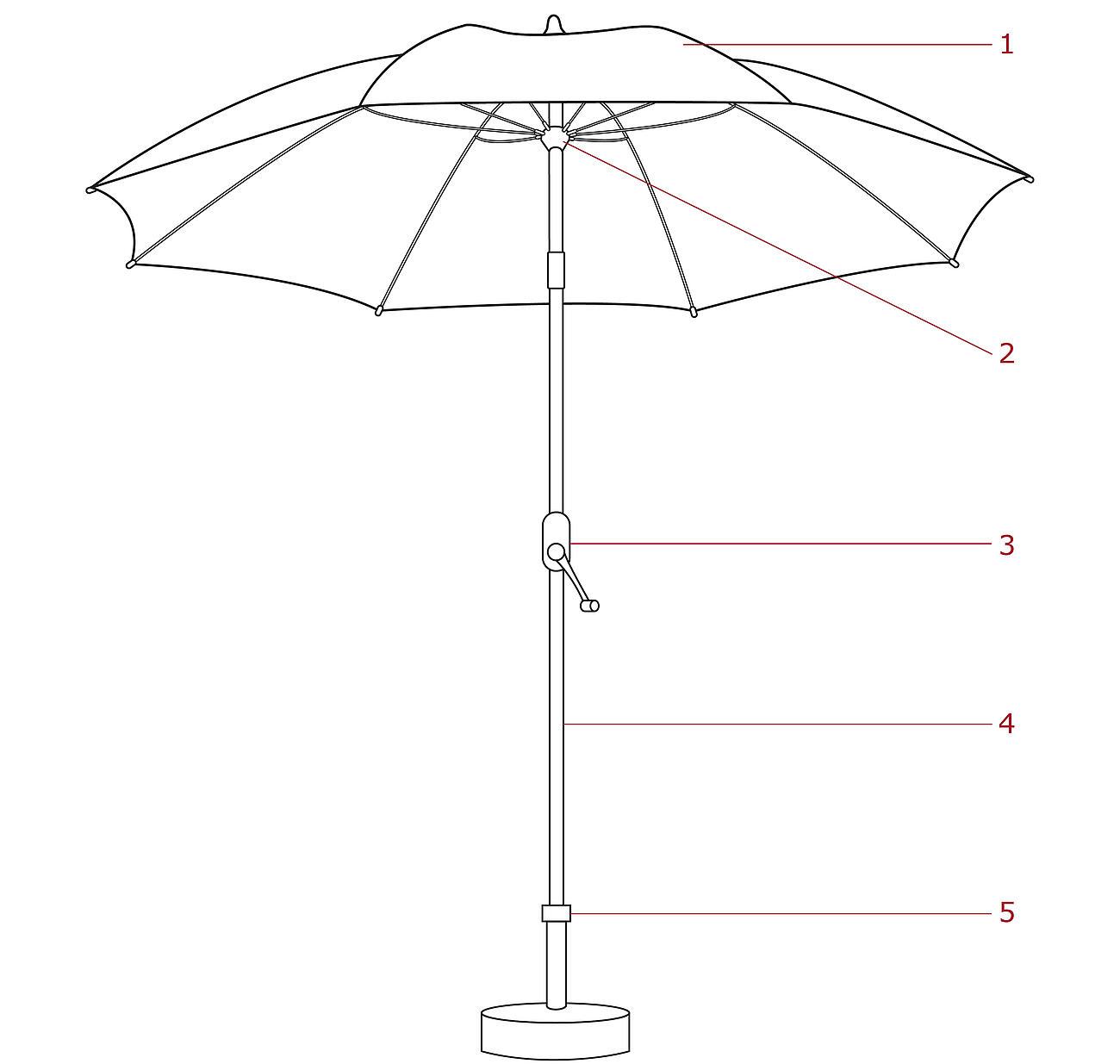
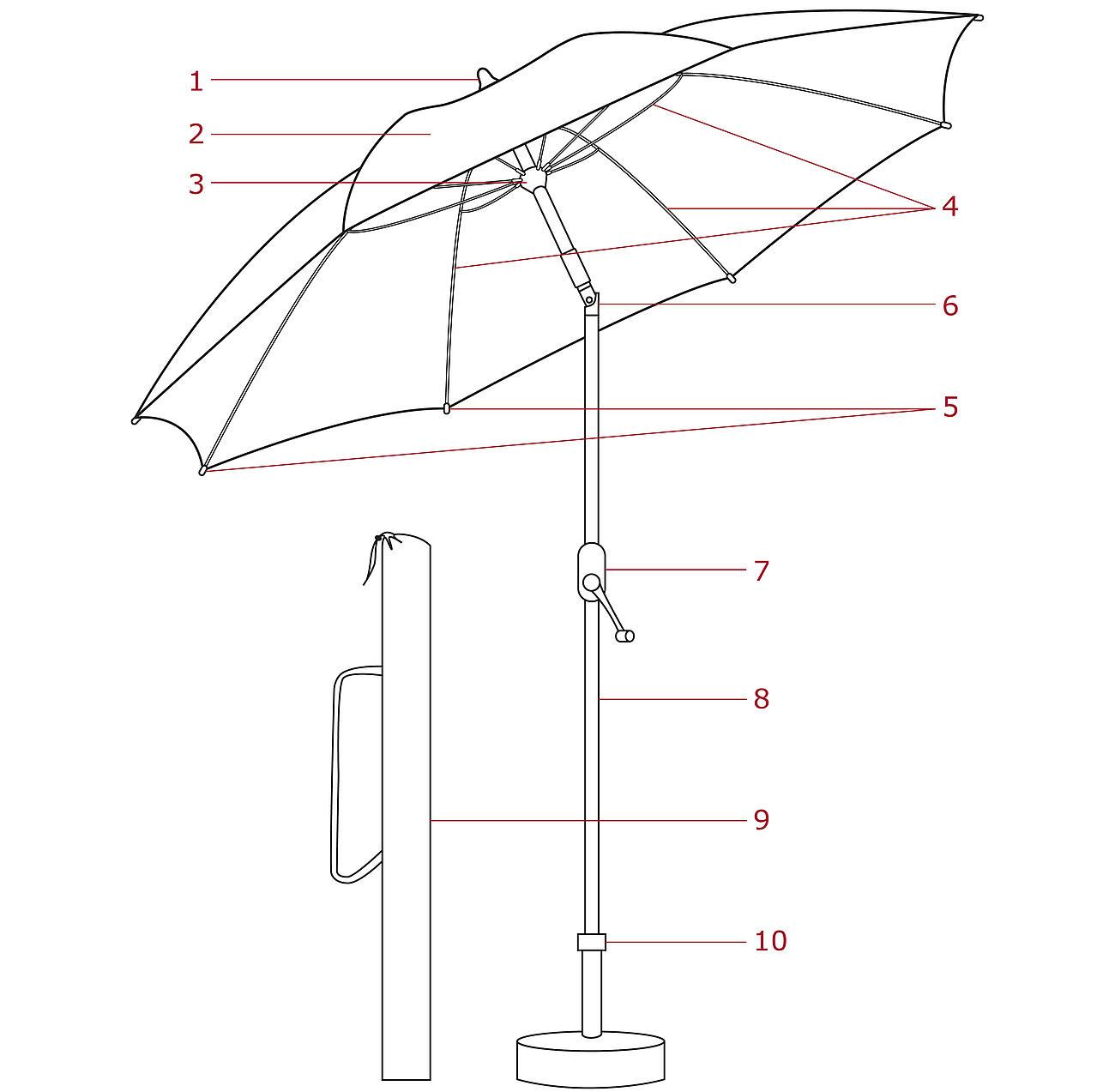
After the rough division into the five main areas, here is an overview of the many components of a parasol:
- 1. Parasol tip / crown
- Position:
At the top of the canopy, often designed as a small “second” parasol above the main canopy. - Function:
Allows air to circulate and reduces wind pressure, making the parasol more stable.
Design: Ventilation openings come either as a simple hole or as a second layer of fabric, which keeps the parasol stable even in light wind.
- 2. Cover / canopy fabric
- Material:
Often polyester, acrylic, olefin or other UV-resistant fabrics. - Function:
Protects against sun, UV radiation and, depending on the material, also against light rain. - Density and UV protection:
Parasol fabrics often have a UV protection factor (UPF) and different densities, e.g. 180 g/m² to 300 g/m², which determines the degree of protection and shade.
Colours and patterns: Wide selection, often UV-stabilised so that the colour does not fade.
- 3. Rib crown
- Position:
In the middle of the pole, connecting the ribs. - Function:
Central connecting mechanism that holds and stabilises the ribs. - Mechanism:
Often designed so that it moves along as the parasol is opened and closed.
Material: Usually made of plastic or metal to withstand pressure and movement.
- 4. Ribs
- Material:
Often aluminium, fibreglass or steel, depending on the desired flexibility and weather resistance. - Function:
Tension the canopy and give it its shape. - Number:
Usually 6 to 8 ribs on smaller parasols, and up to 12 on larger ones for increased stability.
Flexibility: Some materials, such as fibreglass, are more flexible and withstand wind better, while aluminium and steel are particularly robust.
- 5. Rib pocket / rib cap
- Position:
Along the outer edges inside the parasol. On square and rectangular parasols, in the middle of the edges as well as at the corners. - Function:
Small tubes / pockets that fasten the ends of the ribs to the parasol.
Advantage: Provides better protection from the low afternoon sun.
- 7. Opening system
- Function:
Systems for easily opening and closing the parasol. - Position:
Usually at the height of the lower part of the pole, or at the height of the rib crown. - Material:
Often made of plastic or aluminum. Higher-end models are made of stainless steel for greater durability.
Material: Often made of plastic or aluminium. In higher-quality models, of stainless steel for greater durability.
- 8. Pole
- Material:
Usually aluminium or wood, as aluminium is rust-free and lightweight, while wood offers an attractive, natural look. - Function:
Supports the parasol and connects it to the base. - Design:
Often with a diameter of between 2.5 and 5 cm. Some poles have a telescopic function or can be folded.
Construction: Some parasols have a central pole, others (such as cantilever parasols) a side pole for more space underneath the parasol.
- 9. Parasol cover or protective cover (optional)
- Material:
Often made of waterproof polyester or PVC. - Function:
Protects the parasol from the weather, UV radiation and dirt when it is not in use.
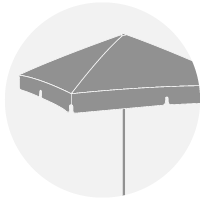
In addition, with many parasols it is also worth paying attention to other special features that are in no way inferior to the basic components in terms of functionality and comfort.
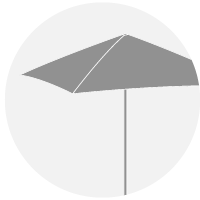
With valance
Without valance
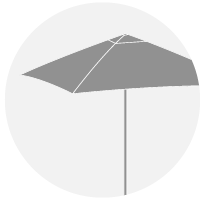
With a windshield
With wind vent
Without wind vent
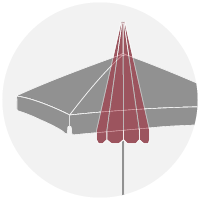
With telescoping function
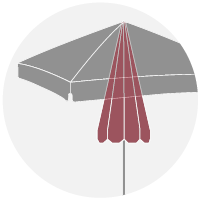
With telescopic function
Without telescopic function

Weight calculator for parasol bases
How heavy should a parasol base be? To answer this question quickly and easily, we have integrated a weight calculator on our website.

Care tips for parasols
To ensure the longest possible lifespan of your parasol, a little care is needed. Caring for parasols is simple and not time-consuming. That's why we've put together some useful tips for you.

10 tips for buying parasols
With these tips, choosing the right parasol is not difficult. We explain what matters so you can select the optimal model for your application.