





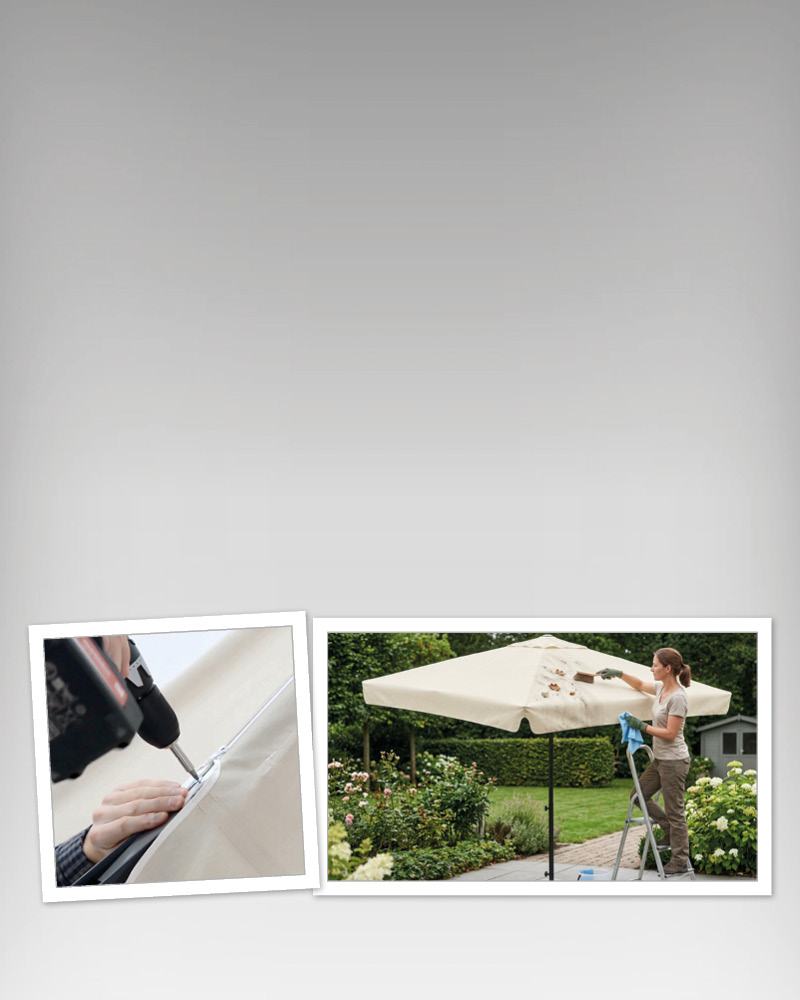
How to properly care for and clean your parasols
6 care tips for your parasol
Parasols are exposed to strong weather conditions in everyday use, but their care is not complicated. With the right measures for cleaning, storage, and use, you can significantly extend the lifespan of your parasol. In this guide, we show you the most important tips for caring for parasols.
Tip 1: Close it at the right moment
Proper everyday handling is essential for the durability of your parasol.
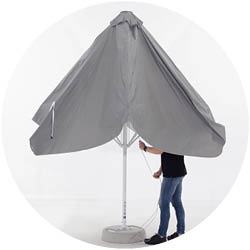
- Never leave your parasol closed while it is still wet. Moisture trapped inside creates ideal conditions for mould, mildew stains, and unpleasant odours. Always allow the parasol to dry completely before closing it. If this is not possible in exceptional cases, open it again as soon as possible to let it dry fully.
- You should also be careful in windy conditions. Even high-quality parasols are only designed to withstand certain wind speeds. Stronger gusts can already damage the ribs. Therefore, close your parasol in time when wind picks up and secure it in the closed position with a strap or cover to avoid unnecessary strain on the fabric.
- In addition, strong sunlight can fade the fabric and especially digital prints. It is therefore recommended to close the parasol even when it is not in use on very sunny days. If the canopy loses its appearance despite high lightfastness and proper care, it can be easily replaced on many models.
Tip 2: Cleaning your parasol
Regular cleaning is important to extend the lifespan of your parasol and maintain its neat appearance.
Frames made of aluminium, steel, or wood are easy to care for and require only minimal maintenance. However, the canopy should be cleaned regularly to remove dirt, dust, and insect residue. Bird droppings and insect stains are particularly problematic, as they can damage the textile fibres if not removed promptly. As a general rule: the fresher the stain, the easier it is to remove.
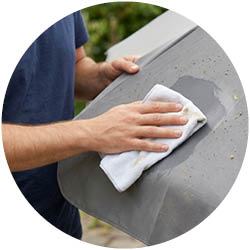
- Light soiling can be gently removed with a damp cloth, a soft brush, or a vacuum cleaner with a brush attachment.
- For heavier dirt, we recommend cleaning with lukewarm water, a soft sponge, and a mild detergent. Allow the solution to work for around 15–20 minutes before rinsing thoroughly with clean water. Afterwards, always let the parasol dry completely in an open position.
- In cases of mould, extra care is required. Light spots can be carefully wiped off. A mild alcohol-water solution can then be used to clean the affected areas. It is better to treat the area gently several times rather than aggressively once.
- Harsh cleaning agents such as chlorine or bleach should be avoided at all costs, as they can permanently damage the fabric and its protective coating.
Note: On many models, the canopy can be removed for more intensive cleaning if needed.
Tip 3: Proper storage
Proper storage is essential to protect both the material and the mechanism in the long term.
- When not in use for extended periods, especially during winter, the parasol should be stored in a dry and well-ventilated place. Damp, enclosed spaces without air circulation should be avoided, as they can quickly lead to mould or unpleasant odours.
- Before storing the parasol, it should be thoroughly cleaned and completely dried.
- Using a protective cover is also recommended. It helps shield the parasol from dust, dirt, and moisture. High-quality covers are typically made of durable polyester with a PU coating, making them water-repellent while still breathable.

Tip 4: Use repair options
A damaged canopy or individual broken ribs do not necessarily mean the entire parasol needs to be replaced. In many cases, these components can be easily replaced. To extend the lifespan of your parasol, we therefore offer a wide range of spare parts.
If you cannot find a specific spare part in our shop or have questions about repairs, simply get in touch with us!

Tip 5: Renew the waterproof coating
A waterproof coating helps keep your parasol water- and dirt-repellent.
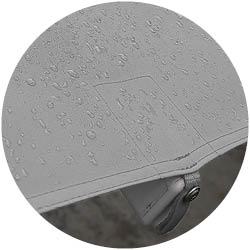
- All parasols are treated with a protective coating at the factory, allowing water to bead off and preventing dirt from sticking as easily. Over time, however, this protective layer can wear off due to UV exposure, cleaning, and weather conditions. In such cases, a special waterproofing spray for outdoor textiles can be used to restore the protective function.
- If the coating no longer works reliably despite treatment, replacing the canopy if the coating no longer works reliably despite treatment.
Important: Parasols are primarily designed as sun protection and do not provide full rain protection. Even an intact waterproof coating cannot completely withstand heavy or prolonged rain. For this purpose, alternative solutions such as pop-up tents or gazebos are more suitable.
Tip 6: Choose the right quality from the start
Only when the quality of the parasol is right can proper care be fully effective.
High-quality models feature sturdy frames made of aluminium, steel, or wood, as well as durable polyester canopies with a protective coating. These materials are designed for longevity and easy maintenance. The intended use should already be considered at the time of purchase. Depending on the location and application, different levels of stability are required, especially in commercial settings.
Still looking for the right parasol? No problem! We have compiled 10 Tips for buying parasols that will definitely help you make the right choice.

Summary: The Most Important Care Tips
The lifespan of a parasol can be significantly extended through a combination of proper use, regular cleaning, and suitable storage. Even small, routine measures are enough to maintain functionality, stability, and appearance for many years – both in private and commercial use.
- Never close a parasol while it is wet
- Remove loose dirt regularly
- Clean gently and avoid harsh cleaning agents
- Store in a dry, protected place, ideally with a cover
- Refresh the waterproof coating when needed
- Consider the intended use and quality already at the time of purchase